When electro-optic systems become too complex to maintain
As electro-optic systems expand across fiber lasers, machine vision, LiDAR, telecom optics, and coated components, maintenance becomes a strategic issue rather than a routine task.
What begins as a manageable platform can evolve into a fragile mix of optics, firmware, thermal controls, calibration workflows, safety rules, and vendor dependencies.
When electro-optic systems become too complex to maintain, the real costs appear through downtime, unstable output, delayed repairs, and poor lifecycle visibility.
This guide explains how to recognize the warning signs, compare manageable and unmanageable architectures, and reduce long-term maintenance risk without sacrificing performance.
What does “too complex to maintain” mean for electro-optic systems?
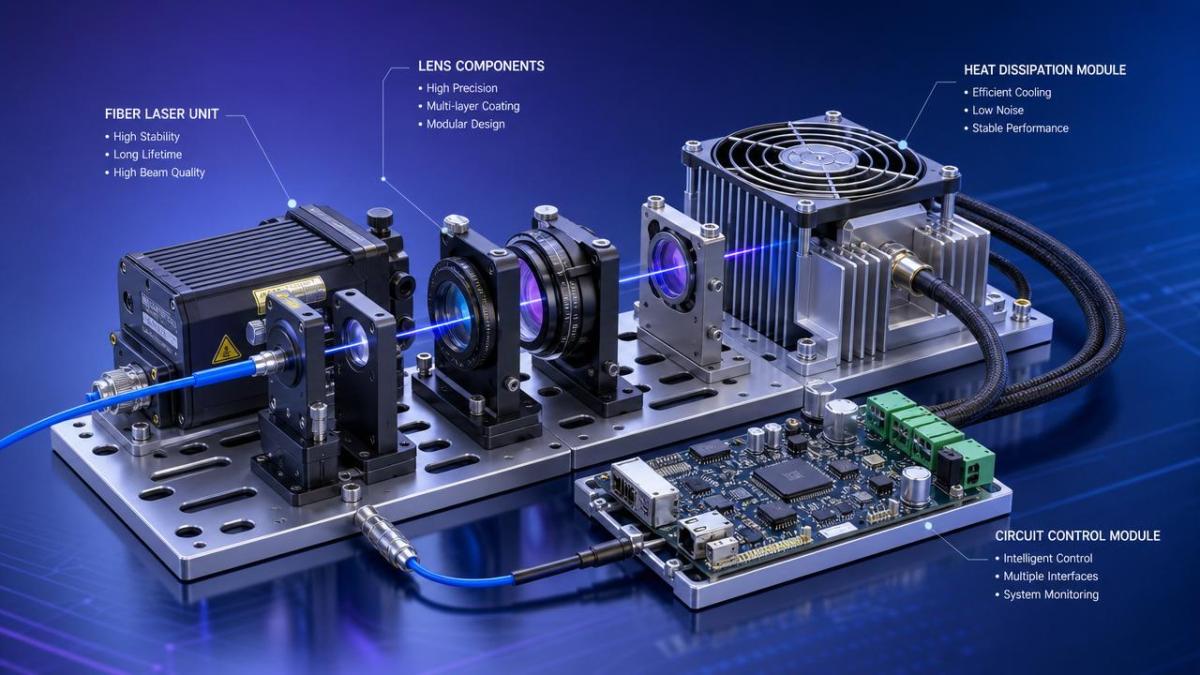
In practice, electro-optic systems become too complex to maintain when support effort rises faster than operational value.
Complexity is not only about component count. It also includes calibration chains, software layers, thermal drift, contamination sensitivity, and interoperability across subsystems.
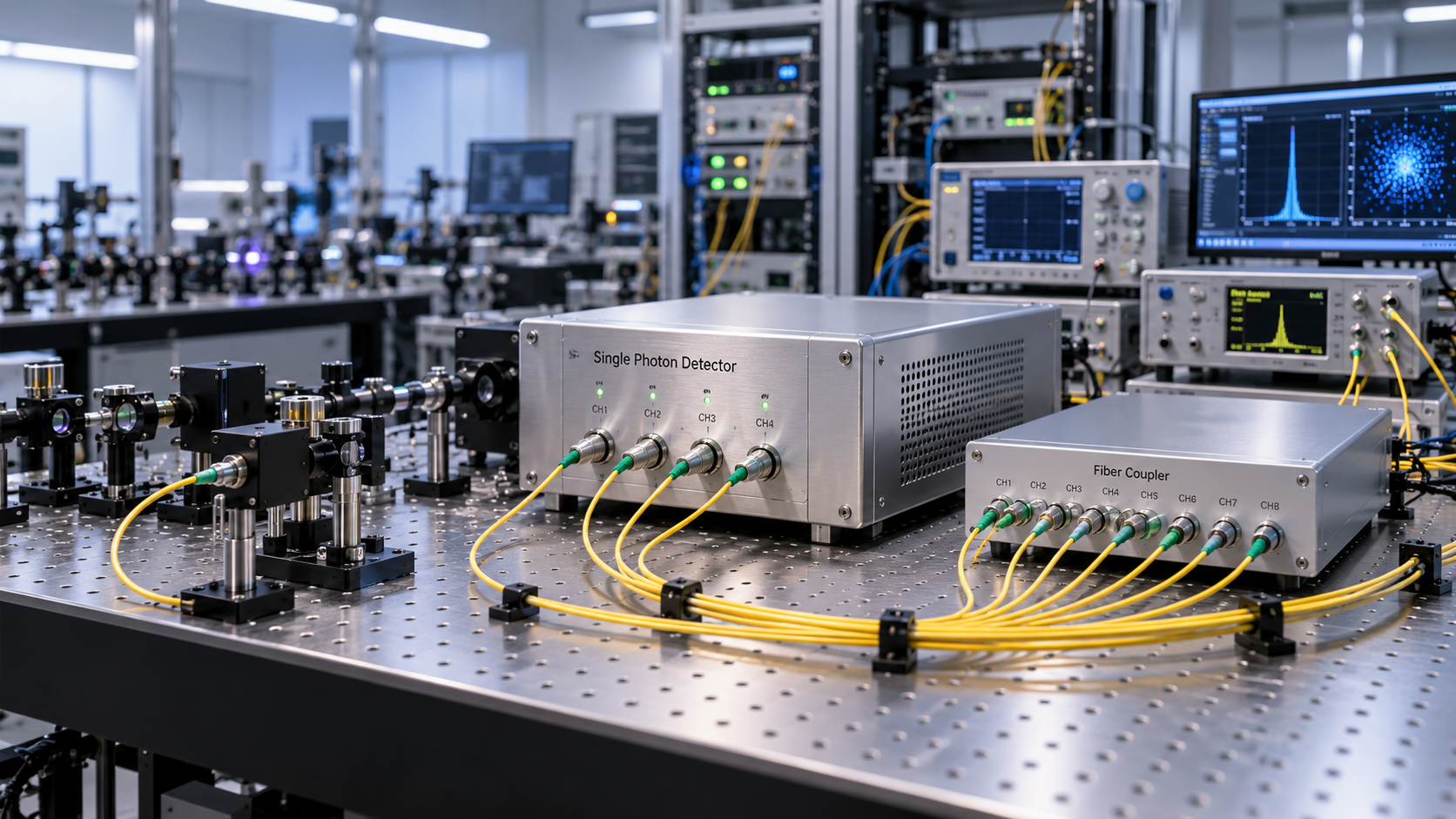
A high-power laser line may include pump modules, specialty fibers, cooling loops, beam delivery optics, safety interlocks, and process monitoring cameras.
A LiDAR stack may combine emitters, SPAD receivers, optics, timing electronics, DSP, firmware, and perception interfaces.
Each layer adds a maintenance burden. The burden becomes critical when one fault requires several specialists, several tools, and several days to isolate.
At that point, electro-optic systems stop behaving like equipment and start behaving like ecosystems with failure cascades.
Typical traits of over-complex electro-optic systems
- Frequent recalibration after minor servicing
- Limited documentation across optics, electronics, and software
- Single-source parts with long replacement lead times
- Unclear root cause between hardware and algorithmic faults
- Maintenance requiring factory-only intervention
Which warning signs show electro-optic systems are becoming unmanageable?
The earliest sign is not total failure. It is growing unpredictability.
Output power may drift, image contrast may vary, signal-to-noise may fall, or point-cloud accuracy may change across temperature conditions.
These symptoms often appear long before a subsystem breaks completely.
Another warning sign is troubleshooting inflation. Small issues begin consuming large teams, more spare parts, and longer validation cycles.
If every repair creates a new alignment task, software patch, or compliance review, the system is nearing a maintenance threshold.
Common operational red flags
- Mean time to repair keeps increasing
- Different vendors blame each other for the same issue
- Field technicians cannot reproduce lab performance
- Firmware changes affect optical stability
- Spare inventory grows, but uptime does not improve
For electro-optic systems in harsh manufacturing or outdoor autonomy, contamination and thermal instability accelerate these warning signs.
Precision coatings, lenses, and fiber connectors are especially sensitive to handling quality and environmental control.
Why do maintenance challenges rise so quickly in modern electro-optic systems?
Modern electro-optic systems combine physical optics with digital control, data processing, and safety compliance.
That convergence creates nonlinear maintenance behavior. One small deviation can affect several layers at once.
For example, a cooling issue in a fiber laser may change thermal lensing, shift beam quality, and trigger software alarms.
A coating defect in imaging optics may appear first as an algorithm problem because contrast and spectral response change.
In LiDAR, timing jitter, receiver sensitivity, optics contamination, and DSP tuning may interact in subtle ways.
Main drivers of maintenance complexity
- Tighter tolerances in alignment, wavelength control, and optical losses
- More software-defined behavior inside hardware platforms
- Higher safety and regulatory expectations
- Cross-domain dependence between optics, electronics, and data systems
- Global supply chains for specialized components
Organizations often underestimate the cumulative effect. They budget for component replacement, but not for calibration logic, contamination control, and software validation.
How can you judge whether electro-optic systems are still maintainable?
A useful test is to evaluate maintainability as a design property, not a service outcome.
If electro-optic systems require rare expertise for routine recovery, they are already approaching an unsustainable state.
Maintainable platforms usually isolate faults clearly, support modular replacement, preserve calibration references, and document interfaces well.
Unmaintainable platforms hide failure modes behind proprietary software, sealed assemblies, and undocumented optical dependencies.
Quick assessment checklist
If several risk signs appear together, electro-optic systems likely need redesign, not just better maintenance scheduling.
What mistakes make electro-optic systems harder to maintain over time?
One major mistake is optimizing only for peak performance.
Electro-optic systems that win on laboratory metrics may fail in service if they lack contamination tolerance, thermal headroom, or field diagnostics.
Another mistake is mixing too many vendors without strong interface governance.
This can work during integration, but fail during maintenance when no single party owns the full behavior chain.
A third mistake is ignoring lifecycle data. Without trend data, teams repair symptoms instead of controlling root causes.
Frequent misconceptions
- Higher precision always means better long-term value
- Factory calibration alone guarantees field stability
- More sensors automatically simplify diagnostics
- Sealed optical modules remove maintenance burden entirely
In reality, electro-optic systems need balanced engineering between performance, maintainability, availability, and supply resilience.
How can complexity be reduced before maintenance costs explode?
The best time to control complexity is before expansion, not after repeated service incidents.
Start by mapping every critical dependency in the electro-optic systems architecture.
This includes optical alignment points, firmware versions, thermal interfaces, contamination-sensitive surfaces, and external software dependencies.
Then rank each dependency by failure impact and recovery difficulty.
Practical reduction strategies
- Adopt modular optical and electronic assemblies where possible
- Standardize calibration procedures across sites
- Track drift data, not only failure events
- Use interface documentation that joins optics, electronics, and software
- Build spare plans around long-lead optical components
- Validate serviceability during design reviews
For advanced electro-optic systems, predictive maintenance should focus on stability indicators such as output drift, thermal spread, optical loss, and timing variance.
That approach is usually more valuable than waiting for complete failure.
FAQ summary: when should action be taken?
When electro-optic systems become too complex to maintain, the issue is rarely a single failed part.
It is usually an architectural signal that reliability, serviceability, and ownership boundaries are out of balance.
The most effective response is early evaluation, disciplined modularity, strong documentation, and maintenance planning linked to real optical behavior.
For any organization relying on electro-optic systems, the next step is simple: audit the support burden now, before complexity becomes the most expensive component.
Recommended News
 Optical TransceiversKeruisi Shares Jump 20% on Honggang Optoelectronics Acquisition PlanKeruisi shares jump 20% on plans to acquire Honggang Optoelectronics. Explore the deal's AI optical packaging potential and key questions behind the market rally.Oct 27, 2026Author:Photonics Strategist
 Ultrafast Solid-state LasersIndustrial Pulsed Lasers: Picosecond vs. Femtosecond for MicromachiningCompare industrial lasers pulsed at picosecond and femtosecond durations for micromachining. Discover how to balance precision, thermal damage, throughput, and cost per accepted part.Oct 26, 2026Author:Laser Physics Architect
 Narrowband/IR Cut FiltersHow to Verify RoHS Compliance of Dielectric Thin Films in Optical FiltersVerify dielectric thin films RoHS compliance in optical filters. Learn how to assess supplier evidence, avoid testing pitfalls, and validate exemptions with confidence.Oct 25, 2026Author:Optical Coating Scientist
 Single Photon DetectorsHesai Leads Global ADAS Primary LiDAR Shipments With 43% Share, Yole ReportsHesai leads global ADAS primary LiDAR shipments with a 43% share, Yole reports. Explore its expanded annual capacity of 4 million units and the implications for automotive supply.Oct 25, 2026Author:LiDAR Systems Fellow
 Laser CollimatorsOptical System Alignment: Correcting Beam Offset and Tilt in Laser SetupsMaster optical systems alignment with practical steps to correct beam offset and tilt. Learn two-plane verification to reduce clipping, improve coupling, and achieve repeatable laser performance.Oct 24, 2026Author:Laser Physics Architect
 Single Photon DetectorsChinese Scientists Develop 100-Channel Single-Photon Detector for Quantum InternetChina’s reported 100-channel single-photon detector could advance the quantum internet. Explore its potential for scalable networks and what buyers should verify.Oct 24, 2026Author:LiDAR Systems Fellow
 3D Laser ProfilersOptical Metrology Accuracy: Evaluating 3D Laser Profilers for Reflective PartsOptical Metrology accuracy matters on reflective parts. Learn how to evaluate 3D laser profilers, uncover hidden errors, and choose a system proven under real production conditions.Oct 23, 2026Author:Machine Vision Optical Expert
 Opto-Capital & Vision EconTech Selloff Hits Optics Before Earnings: Coherent Falls 12%, AAOI 10%, Lumentum 9%Tech selloff hits optical stocks: Coherent falls 12%, AAOI 10%, and Lumentum 9% ahead of earnings. Explore the reported declines and what buyers should watch in supplier disclosures.Oct 23, 2026Author:Mr. Orion Cross
 Telecentric LensesOptical Inspection for Dimensional Measurement: When to Use Telecentric LensesCompare optical inspection systems for dimensional measurement. Learn when telecentric lenses reduce perspective errors and how to select optics that meet your accuracy and budget goals.Oct 22, 2026Author:Machine Vision Optical Expert
 Optical TransceiversPhoton Bridge Raises €10 Million to Expand AI Data Center Laser CapacityPhoton Bridge raises €10 million to expand AI data center laser diode capacity. Explore its high-yield manufacturing plans and what ELS prototype sampling could mean for optical interconnects.Oct 22, 2026Author:Photonics Strategist
 Narrowband/IR Cut FiltersMultispectral Imaging Optics: Choosing Filter Bandwidth to Reduce CrosstalkOptimize multispectral imaging optics with the right filter bandwidth. Learn how to reduce crosstalk, preserve signal strength, and improve material classification.Oct 21, 2026Author:Optical Coating Scientist
 Single Photon DetectorsSivers Semiconductors Secures Production Order from Strategic LiDAR CustomerSivers Semiconductors secures a production order from a strategic LiDAR customer, with deliveries set for Q4 2026. Explore what this milestone means for its photonics business.Oct 21, 2026Author:LiDAR Systems Fellow
 Laser Safety & CDRH RegsU.S. Laser Safety Regulations: OSHA Requirements vs. ANSI Z136 StandardsLaser Safety Regulations explained: compare OSHA requirements with ANSI Z136 standards, uncover compliance gaps, and learn practical steps to protect workers and evaluate laser equipment.Oct 20, 2026Author:Dr. Chloe Vance
 Ultrafast Solid-state LasersELI Opens L4 ATON Multi-Petawatt Laser Research to the International CommunityExplore ELI L4 ATON multi-petawatt laser research at P3, international access opportunities, and key proposal checks to help your team plan its next high-field experiment.Oct 20, 2026Author:Laser Physics Architect
 Optical TransceiversChoosing an Optoelectronic Integration Platform for High-Speed TransceiversChoose the right optoelectronic integration platform for high-speed transceivers. Compare link performance, power, packaging, and production readiness to make a confident design decision.Oct 19, 2026Author:Photonics Strategist
 CW Yb-doped LasersBeam Shaping for Copper Laser Welding: How Core-Ring Profiles Reduce SpatterExplore laser welding technology beam shaping: discover how core-ring profiles can reduce copper weld spatter while maintaining penetration, and learn key settings for reliable joints.Oct 18, 2026Author:Laser Physics Architect
 Opto-Capital & Vision EconIndustrial Photonics Market: Where Is Factory Automation Driving Demand?Explore how factory automation drives the industrial photonics market, from battery welding to semiconductor inspection. Discover demand hotspots and key factors shaping investment returns.Oct 17, 2026Author:Mr. Orion Cross
 PM & Radiation-hard FibersISO 10110 for Optical Components: Interpreting Surface Quality and TolerancesOptical component standards ISO 10110 explained: decode surface quality, form, texture, and alignment tolerances to avoid costly inspection errors. Read the practical guide.Oct 16, 2026Author:Photonics Strategist
 Silicon Photonics OPA1550 nm Optical Phased Arrays: What Limits Field of View and Angular Resolution?Optical Phased Array 1550nm performance depends on more than steering range. Discover how emitter pitch, aperture, and calibration limit field of view and resolution—and what to verify before buying.Oct 15, 2026Author:LiDAR Systems Fellow
 Optical TransceiversLow-Latency Optical Interconnects: What Sets End-to-End Delay in AI Clusters?Optical interconnects: low latency starts with the full AI cluster communication path. Discover what drives delay, how to measure bottlenecks, and where upgrades can improve performance.Oct 14, 2026Author:Photonics Strategist